In Strong Winds
The earthworms know the future
the birds fly away for the bombing
only much later do you pick up the pieces
holding your breath for the thousand leaves
your water in bottles in an unlighted room
you bite your own hand like a hamburger
a hurricane has come taking angry stock
flaying rivers and trees, sending roof slates
miles off in search of a field without a house
but you're going to miss the Apocalypse
now you have to eat the left-overs fast
before the moon sets and dark animals come
it's only August, the lucky month of leaders
you've just lost your job, you have $20.
© 2011 Rob Schackne
Tuesday, August 30, 2011


Thursday, August 25, 2011
POEM: "Today The Lesson Is Fresh Air"
Today The Lesson Is Fresh Air
A 60-year-old man, and she is 23
And naturally she is very beautiful
Walking on the bridge he breathes
The air suspended between 2 peaks
She waits for each word, she presses
His hand to her ear. He doesn't say it.
Sunset seagulls play shivaree below,
One has what looks like a banana peel
Zen lessons years ago he remembers
Detachment from all that causes pain
Though desire can make a lousy poem
He will not carry her from his mind.
© 2011 Rob Schackne
A 60-year-old man, and she is 23
And naturally she is very beautiful
Walking on the bridge he breathes
The air suspended between 2 peaks
She waits for each word, she presses
His hand to her ear. He doesn't say it.
Sunset seagulls play shivaree below,
One has what looks like a banana peel
Zen lessons years ago he remembers
Detachment from all that causes pain
Though desire can make a lousy poem
He will not carry her from his mind.
© 2011 Rob Schackne
Thursday, August 18, 2011
POEM: "Why Maps Matter"
Why Maps Matter
The bugs are plaguing you
The ruts are getting deeper
You are unfolding the map
There’s a dead beast up ahead
Her giggling continues, you reach in
A brown bag for a sip of Jack D
The machine almost out of control
Not exactly because of you, but well
Damn, levity is beyond your powers
She slaps foul goo all over you
The tube says Use By 2006
And the map is nearly useless
A million insects suddenly go nuts
Their number’s been dialled at last
You swat at them hard with the map
When you get back on the sacred road
You miss your turn-off, damn it all
How far do brutal tracks go?
© 2011 Rob Schackne
Wednesday, August 17, 2011
POEM: "The Art Of China"
The Art Of China
WW in prison
as a punishment
the guards make him
wash his own clothes
(Never pleasure for them both)
Pavement night
there was no moon
summer impenetrable
a beggar lay beating
long summer odds
feigning sleep
To walk on, to hum
to admire the skulls
(What's that in Chinese?)
Around the clock
& inches away
they're shouting
they want you to wake up
Get back on board!
Released.
Then write again.
© 2011 Rob Schackne
WW in prison
as a punishment
the guards make him
wash his own clothes
(Never pleasure for them both)
Pavement night
there was no moon
summer impenetrable
a beggar lay beating
long summer odds
feigning sleep
To walk on, to hum
to admire the skulls
(What's that in Chinese?)
Around the clock
& inches away
they're shouting
they want you to wake up
Get back on board!
Released.
Then write again.
© 2011 Rob Schackne
Tuesday, August 16, 2011
A William Matthews Poem
 Office Life
Drab bickering, the empire dead and tax
reports alive, paperwork, erasure,
the grime on the philodendron leaves
since who tends everybody’s plant?
It’s the triumph of habit over appetite,
like comparing the stars to diamonds.
We make copies. We send out for food. Food
arrives. We have spats and tizzies and huffs.
Isn’t it great being grown up, having
a job? We get our work done more or less
and go home. How was it today? we’re asked
and don’t know what to say. It’s like wet soot,
like us, like what we feel: stuck on itself,
as, from here, starlight seems stuck to its star.
(from New Hope For The Dead: Uncollected Matthews, 2010)
Wednesday, August 10, 2011
A Jorge Luis Borges Poem
 Limits
 Of all the streets that blur in to the sunset,
There must be one (which, I am not sure)
That I by now have walked for the last time
Without guessing it, the pawn of that Someone
Who fixes in advance omnipotent laws,
Sets up a secret and unwavering scale
for all the shadows, dreams, and forms
Woven into the texture of this life.
If there is a limit to all things and a measure
And a last time and nothing more and forgetfulness,
Who will tell us to whom in this house
We without knowing it have said farewell?
Through the dawning window night withdraws
And among the stacked books which throw
Irregular shadows on the dim table,
There must be one which I will never read.
There is in the South more than one worn gate,
With its cement urns and planted cactus,
Which is already forbidden to my entry,
Inaccessible, as in a lithograph.
There is a door you have closed forever
And some mirror is expecting you in vain;
To you the crossroads seem wide open,
Yet watching you, four-faced, is a Janus.
There is among all your memories one
Which has now been lost beyond recall.
You will not be seen going down to that fountain
Neither by white sun nor by yellow moon.
You will never recapture what the Persian
Said in his language woven with birds and roses,
When, in the sunset, before the light disperses,
You wish to give words to unforgettable things.
And the steadily flowing Rhone and the lake,
All that vast yesterday over which today I bend?
They will be as lost as Carthage,
Scourged by the Romans with fire and salt.
At dawn I seem to hear the turbulent
Murmur of crowds milling and fading away;
They are all I have been loved by, forgotten by;
Space, time, and Borges now are leaving me.
(Tr. Alastair Reid)
Tuesday, August 2, 2011
POEM: "Y Por La Mañana Miraba"
Y Por La Mañana Miraba
Yo soy yo y mi circunstancia
José Ortega y Gasset
You think you know
the histories of a person's hand
what touched it, what it did
these hearts are leather gloves
whether pounding a kitchen table
or shooting something inattentive
of course there's a gentle side
the hands of the farmer husband
who makes paper birds for children
now the hot summer months
I am I and my circumstances, he says
pick up the bullet and show me
you say it to any human heart.
Yo soy yo y mi circunstancia
José Ortega y Gasset
You think you know
the histories of a person's hand
what touched it, what it did
these hearts are leather gloves
whether pounding a kitchen table
or shooting something inattentive
of course there's a gentle side
the hands of the farmer husband
who makes paper birds for children
now the hot summer months
need trucks to carry water
and the beasts are sullen
I am I and my circumstances, he says
pick up the bullet and show me
you say it to any human heart.
© 2011 Rob Schackne
A Rosemary Nissen-Wade Poem
Quietly Surprising
(Found poem: Cryptic crossword clues)
One enters
very quietly
the final conduit
quiet knock
Len returning
with bits of broken shell
nice to come back
into quiet, first-rate court area
the French shelter
outside the open atrium
with a kind of concealed energy
the boy it brings back
makes hand signals in water surges
surprising boy dancer
a pro, he is faultless.
(2011)
Wednesday, July 27, 2011
A Michael Blumenthal Poem
 The Nurse
after Tennyson
Now come the purple garments, now the white;
Now move the vagrant beds among the disinfected halls;
Now stretch the opaque hose between the antiseptic rooms:
I waken: and she looks at me.
Now droops the freshly propped-up pillow like a ghost,
And like a ghost she sets it right for me.
Now lie the intravenous tubules by the door,
And all the body's ills stare openly at me.
Now drifts the slim physician on, and leaves
His clipboard hanging like a thought in front of me.
Now folds the young nurse all her aprons up,
And slips her lovely bosom in a waiting car:
And so desire folds itself as well, and slips
Into my arms, and then is lost in me.
Now stretch the opaque hose between the antiseptic rooms:
I waken: and she looks at me.
Now droops the freshly propped-up pillow like a ghost,
And like a ghost she sets it right for me.
Now lie the intravenous tubules by the door,
And all the body's ills stare openly at me.
Now drifts the slim physician on, and leaves
His clipboard hanging like a thought in front of me.
Now folds the young nurse all her aprons up,
And slips her lovely bosom in a waiting car:
And so desire folds itself as well, and slips
Into my arms, and then is lost in me.
(2011)
Tuesday, July 26, 2011
A Jennifer Chang Poem
 Again A Solstice
 It is not good to think
of everything as a mistake. I asked
for bacon in my sandwich, and then
I asked for more. Mistake.
I told you the truth about my scar:
I did not use a knife. I lied
about what he did to my faith
in loneliness. Both mistakes.
That there is always a you. Mistake.
Faith in loneliness, my mother proclaimed,
is faith in self. My instinct, a poor polaris.
Not a mistake is the blue boredom
of a summer lake. O mud, sun, and algae!
We swim in glittering murk.
I tread, you tread. There are children
testing the deep end, shriek and stroke,
the lifeguard perilously close to diving.
I tried diving once. I dove like a brick.
It was a mistake to ask the $30 prophet
for a $20 prophecy. A mistake to believe.
I was young and broke. I swam
in a stolen reservoir then, not even a lake.
Her prophesy: from my vagrant exertion
I'll die at 42. Our dog totters across the lake,
kicks the ripple. I tread, you tread.
What does it even mean to write a poem?
It means today
I'm correcting my mistakes.
It means I don't want to be lonely.
(2011)
Monday, July 25, 2011
POEM: "Bill Evans, Village Vanguard 1961"
Bill Evans, Village Vanguard 1961
for Stu Rawlinson
1.
Bill plays My Foolish Heart
What a bass line and what a piano
A smart melody beyond economics
(The cocktail glasses we can hear them)
What value could we ever add to it?
2.
You wrote that she’s spread by atoms
In a club where strong drink is dealt
(Way too expensive) everybody hears
The manager when he falls over, what
If the atoms still demolish the carpet?
3.
If what we do is love sweetheart come
Tell me there will be poems 10 years from now
Put your black hand back on my piano
Your word you will learn these words
And we will love until we both forget.
© 2011 Rob Schackne
Friday, July 22, 2011
POEM: "Angels Redux"
Angels Redux
I believe that angels always
watch for the falling spirits
bodies that are canted oddly
the eyes that give it all away
the obdurate memories
of late and tender kisses
an agreement of tongues
& just one strong word
but the day it was done
we went out shopping
after that we shot some pool
& later made love for hours
so patiently do they try
not to be fastidious.
© 2011 Rob Schackne
I believe that angels always
watch for the falling spirits
bodies that are canted oddly
the eyes that give it all away
the obdurate memories
of late and tender kisses
an agreement of tongues
& just one strong word
but the day it was done
we went out shopping
after that we shot some pool
& later made love for hours
so patiently do they try
not to be fastidious.
© 2011 Rob Schackne
Thursday, July 14, 2011
An Ian Hamilton Finlay Poem
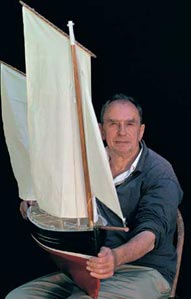
Orkney Interior
Doing what the moon says, he shifts his chair
Closer to the stove and stokes it up
With the very best fuel, a mixture of dried fish
And tobacco he keeps in a bucket with crabs
Too small to eat. One raises its pincer
As if to seize hold of the crescent moon
On the calendar which is almost like a zodiac
With inexplicable and pallid blanks. Meanwhile
A lobster is crawling towards the clever
Bait that is set inside the clock
On the shelf by the wireless—an inherited dried fish
Soaked in whisky and carefully trimmed
With potato flowers from the Golden Wonders
The old man grows inside his ears.
Click! goes the clock-lid, and the unfortunate lobster
Finds itself a prisoner inside the clock,
An adapted cuckoo-clock. It shows no hours, only
Tides and moons and is fitted out
With two little saucers, one of salt and one of water
For the lobster to live on while, each quarter-tide,
It must stick its head through the tiny trapdoor
Meant for the cuckoo. It will be trained to read
The broken barometer and wave its whiskers
To Scottish Dance Music, till it grows too old.
Then the old man will have to catch himself another lobster.
Meanwhile he is happy and takes the clock
Down to the sea. He stands and oils it
In a little rock pool that reflects the moon.
from Selections (2011)
Wednesday, July 6, 2011
From Franz Kafka
A Message from the Emperor
The emperor—it is said—sent to you, the one apart, the wretched subject, the tiny shadow that fled far, far from the imperial sun, precisely to you he sent a message from his deathbed. He bade the messenger kneel by his bed, and whispered the message in his ear. So greatly did he cherish it that he had him repeat it into his ear. With a nod of his head he confirmed the accuracy of the messenger’s words. And before the entire spectatorship of his death—all obstructing walls have been torn down and the great figures of the empire stand in a ring upon the broad, soaring exterior stairways—before all these he dispatched the messenger. The messenger set out at once; a strong, an indefatigable man; thrusting forward now this arm, now the other, he cleared a path though the crowd; every time he meets resistance he points to his breast, which bears the sign of the sun; and he moves forward easily, like no other. But the crowds are so vast; their dwellings know no bounds. If open country stretched before him, how he would fly, and indeed you might soon hear the magnificent knocking of his fists on your door. But instead, how uselessly he toils; he is still forcing his way through the chambers of the innermost palace; never will he overcome them; and were he to succeed at this, nothing would be gained: he would have to fight his way down the steps; and were he to succeed at this, nothing would be gained: he would have to cross the courtyard and, after the courtyard, the second enclosing outer palace, and again stairways and courtyards, and again a palace, and so on through thousands of years; and if he were to burst out at last through the outermost gate—but it can never, never happen—before him still lies the royal capital, the middle of the world, piled high in its sediment. Nobody reaches through here, least of all with a message from one who is dead. –You, however, sit at your window and dream of the message when evening comes.
(1919) trans. Mark Harman
The emperor—it is said—sent to you, the one apart, the wretched subject, the tiny shadow that fled far, far from the imperial sun, precisely to you he sent a message from his deathbed. He bade the messenger kneel by his bed, and whispered the message in his ear. So greatly did he cherish it that he had him repeat it into his ear. With a nod of his head he confirmed the accuracy of the messenger’s words. And before the entire spectatorship of his death—all obstructing walls have been torn down and the great figures of the empire stand in a ring upon the broad, soaring exterior stairways—before all these he dispatched the messenger. The messenger set out at once; a strong, an indefatigable man; thrusting forward now this arm, now the other, he cleared a path though the crowd; every time he meets resistance he points to his breast, which bears the sign of the sun; and he moves forward easily, like no other. But the crowds are so vast; their dwellings know no bounds. If open country stretched before him, how he would fly, and indeed you might soon hear the magnificent knocking of his fists on your door. But instead, how uselessly he toils; he is still forcing his way through the chambers of the innermost palace; never will he overcome them; and were he to succeed at this, nothing would be gained: he would have to fight his way down the steps; and were he to succeed at this, nothing would be gained: he would have to cross the courtyard and, after the courtyard, the second enclosing outer palace, and again stairways and courtyards, and again a palace, and so on through thousands of years; and if he were to burst out at last through the outermost gate—but it can never, never happen—before him still lies the royal capital, the middle of the world, piled high in its sediment. Nobody reaches through here, least of all with a message from one who is dead. –You, however, sit at your window and dream of the message when evening comes.
(1919) trans. Mark Harman
Tuesday, July 5, 2011
An Emily Dickinson Poem
A lane of Yellow led the eye (1650)
A lane of Yellow led the eye
Unto a Purple Wood
Whose soft inhabitants to be
Surpasses solitude
If Bird the silence contradict
Or flower presume to show
In that low summer of the West
Impossible to know—
(c. 1860)
A lane of Yellow led the eye
Unto a Purple Wood
Whose soft inhabitants to be
Surpasses solitude
If Bird the silence contradict
Or flower presume to show
In that low summer of the West
Impossible to know—
(c. 1860)
Sunday, June 26, 2011
A Tomaž Šalamun Poem
 Young Cops
All young cops have soft
mild eyes. Their upbringing is lavish.
They walk between blueberries and ferns,
rescuing grannies from rising waters.
With the motion of a hand they ask for
a snack from those plastic bags. They
sit down on tree stumps, looking at valleys
and thinking of their moms. But woe is me
if a young one gets mad. A Scourge
of God rings, with a club that later you can
borrow to blot your bare feet.
Every cops wears a cap, his head murmuring under it
A sled rushes down a slope in his dreams.
Whomever he kills, he brings spring to,
whomever he touches has a wound inscribed.
I would give my granny and my
grandpa, my mom and my pa, my wife
and my son to a cop to play with.
He would tie up my grannie's white hair,
but he'd probably chop up my son
on the stump of a tree. The cop himself
would be sad that his toy was broken. That's the way they are
when smoking pot: melancholy. They take off
their caps and breathe their tears into them.
Actually, they're like camels riding
in the desert, as if it were the wet palm of a hand.
(2006)
Friday, June 24, 2011
A David Hernandez Poem
 Mosul
MosulThe donkey. The donkey pulling the cart.
The caravan of dust. The cart made of plywood,
of crossbeam and junkyard tires. The donkey
made of donkey. The long face. The long ears.
The curled lashes. The obsidian eyes blinking
in the dust. The cart rolling, cracking the knuckles
of pebbles. The dust. The blanket over the cart.
The hidden mortar shells. The veins of wires.
The remote device. The red light. The donkey
trotting. The blue sky. The rolling cart. The dust
smudging the blue sky. The silent bell of the sun.
The Humvee. The soldiers. The dust-colored
uniforms. The boy from Montgomery, the boy
from Little Falls. The donkey cart approaching.
The dust. The laughter on their lips. The dust
on their lips. The moment before the moment.
The shockwave. The dust. The dust. The dust.
(2011)
Monday, June 20, 2011
POEM: "At Last"
At Last
One general dead in the afternoon
The bells are not ringing, the rain
Continues to beat to no lament
In your heart you moved
Mountains of holes, the soil
Of course the river took its toll
The dream a million times
Writing down the sounds to make
Some small thing of your own
Left out in the stars
Faint, not really in heaven
You and she belong together
You smile, it was all unspoken
She came back pulling an old suitcase
Tied round with rope, a broken wheel.
© 2011 Rob Schackne
One general dead in the afternoon
The bells are not ringing, the rain
Continues to beat to no lament
In your heart you moved
Mountains of holes, the soil
Of course the river took its toll
The dream a million times
Writing down the sounds to make
Some small thing of your own
Left out in the stars
Faint, not really in heaven
You and she belong together
You smile, it was all unspoken
She came back pulling an old suitcase
Tied round with rope, a broken wheel.
© 2011 Rob Schackne
Friday, June 17, 2011
A David Rivard Poem
 The Moon In Time Lapse
The moon in time lapse sliding over skyline
the way a remote frisbee might wheel through air
as slowly as a banjo once floated across the wide
Missouri River in my mind when as a boy
the devil to pay permitted me to dream-up
my get-away from home, far from my parents'
witchy vigilance & the wine-barrel cellars
of their household—this after my experimental
stuffing of a dinner fork into a light socket
in the green gazebo under backyard grapevines.
That fuse box blown & blackened was the bliss
of departure—it was thrilling, but sometimes
I have to stop to touch my life & see if it's real.
How surprising to find that I wanted so much,
and mostly got it. My fantasies are fewer now
(one involves living through a day without
resentments, the other getting seated next to
gorgeous Fanny Ardant on a puddle jumper).
No need to see my life as a story the world
has to read, no need for sentimental
mooning & nostalgia—blessed with a bit
of amnesia anyway, I don't recall much
of what went down. I know that it's engraved
there on some cellular level, & that I can't
command the consequences. Like a spider
who has climbed atop a survey stake in a bull-
dozed field, I feel slightly truer in any case.
(2011)
Wednesday, June 8, 2011
POEM: "Fears We Have For Children"
Fears We Have For Children
The old man said, Johnny
It's time for us to leave
Lou Reed
You'll keep plastic bags away
From the cracks and absent soft
They miss the sounds in the womb
The wild electricity they sense
Drawers of pills, sharp knives
Child's play, what's in store
Years later the stumbling blocks
Most voices singing gloriously
Of that one track made perfect
Keeping errant cars from them
Roads they don't know the way to
Bad directions that change the mind
Danger in a sky above, the earth
Behind, the eyes left and eyes right
Below, keep all bloody things away.
© 2011 Rob Schackne
The old man said, Johnny
It's time for us to leave
Lou Reed
You'll keep plastic bags away
From the cracks and absent soft
They miss the sounds in the womb
The wild electricity they sense
Drawers of pills, sharp knives
Child's play, what's in store
Years later the stumbling blocks
Most voices singing gloriously
Of that one track made perfect
Keeping errant cars from them
Roads they don't know the way to
Bad directions that change the mind
Danger in a sky above, the earth
Behind, the eyes left and eyes right
Below, keep all bloody things away.
© 2011 Rob Schackne
Subscribe to:
Posts (Atom)